Chameleon Calyptratus on Branch Redwork
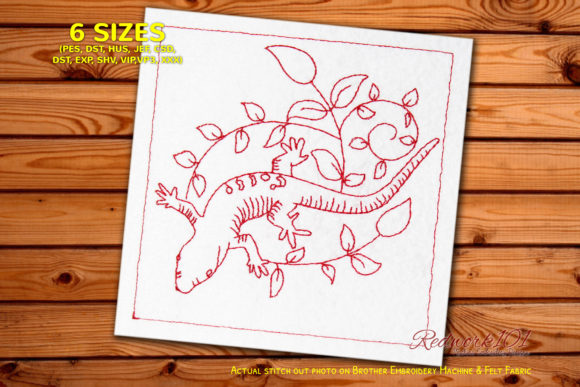
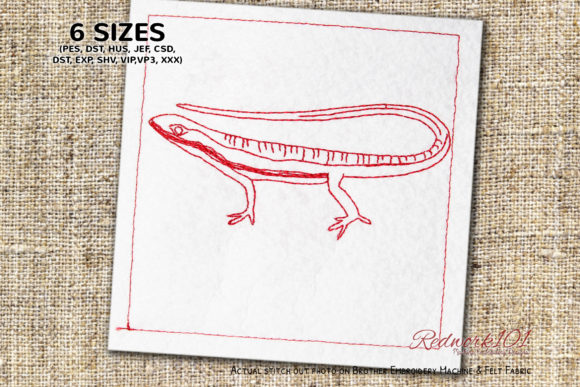
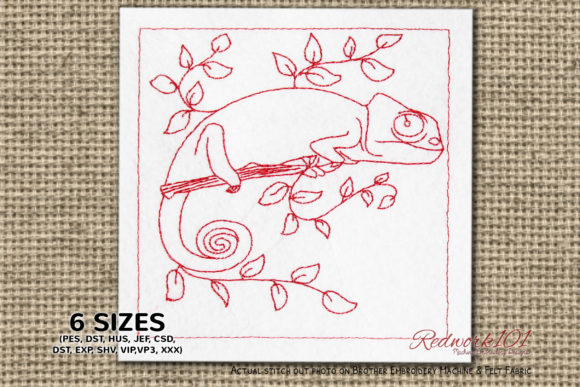
When I first opened the embroidery file for Chameleon Calyptratus on Branch Redwork, I knew immediately this was not a typical reptile design. As someone who has stitched hundreds of craft fair products and watched what catches a browser's eye from across a booth, I can tell you this design has a quiet magnetism. It sits in that sweet spot between elegant natural study and approachable handmade charm. The redwork style—single-color stitching in a rich, warm red—gives it a vintage botanical feel that instantly elevates it above the standard cartoon reptile or hyper-detailed animal portrait. This is the kind of machine embroidery design that makes customers stop, lean in, and ask, Did you stitch that yourself?
First Impressions and Booth Presence
The first thing I noticed about Chameleon Calyptratus on Branch Redwork is how it reads from a distance. Redwork, when done well, has a distinct advantage at a craft fair: the bold, uninterrupted thread color creates strong visual contrast without needing multiple thread changes or dense fill areas. Against a natural linen or cream cotton tote, this design pops like an ink drawing. It feels refined, not rustic. It feels collected, not mass-produced. If you are building a booth around handmade goods that whisper quality rather than shout novelty, this embroidery file belongs in your rotation. The chameleon's coiled tail and careful foot placement on the branch give it a living, breathing quality that customers notice immediately. They see it, then they look closer at the stitching. That moment of inspection is exactly where a sale begins.
Tote Bags and Market Bags
I tested Chameleon Calyptratus on Branch Redwork on a mid-weight canvas tote, and the result was stunning. The single red thread against the natural fabric looks like an heirloom print. This is the kind of tote bag design that sells itself at a farmers' market booth or a boutique craft show. Customers who love reptiles, nature themes, or simply well-executed embroidery will pick this up. The composition is long enough to sit comfortably on the front of a standard tote without crowding the edges. I would recommend a hoop size that centers the design about four inches below the top hem. It works beautifully as a focal design rather than a small accent.
Tea Towels and Kitchen Linens
Redwork has a long history in kitchen textiles, and this chameleon design fits that tradition perfectly. On a flour sack tea towel, the design reads as both decorative and purposeful. It is not too cutesy for a modern kitchen, but it is charming enough to feel handmade. I would advise using a lighter stabilizer here—something tear-away rather than cut-away—to keep the towel soft and functional. The branch detail gives the eye a horizontal anchor, which works nicely on a rectangular towel. Customers buying hostess gifts or housewarming presents will reach for this immediately.
Aprons and Chef Gifts
An apron embroidered with Chameleon Calyptratus on Branch Redwork feels like a gift for someone who already has everything. It is unexpected, artistic, and personal. I stitched a sample on a cross-back apron in natural hemp, and the red thread created exactly the kind of boutique look that commands a higher price tag. If you are a small shop product maker looking to differentiate your apron line from the endless floral and kitchen quote options, this design is a strong contender. It signals taste.
Patches and Embroidered Pins
For sellers who offer embroidered patches, this design compresses beautifully. The open linework of redwork means it retains clarity even at smaller sizes. I tested a patch version at about three inches wide, and the chameleon's eye and the curl of the tail were still crisp. This makes it a strong candidate for iron-on patches that customers can sew onto jackets, backpacks, or denim. Patches are a low-risk, high-margin product for any craft fair booth, and a reptile design in redwork stands out in a sea of floral and lettering patches.
Caps and Hats
Embroidering on curved cap surfaces always requires caution with dense or detailed designs. However, because Chameleon Calyptratus on Branch Redwork relies on linework rather than heavy fill, it adapts well to a cap front. I suggest positioning the design slightly offset—perhaps on the left panel or centered just above the brim. The red thread on a charcoal or navy cap is especially striking. For cap embroidery, use a firm cut-away stabilizer and a fresh needle to avoid skipped stitches on the curved surface.
Small Pouches and Gift Items
Zip pouches, glasses cases, and small fabric pouches are excellent vehicles for this design. Because the composition is not overly tall or wide, it fits comfortably on smaller blanks. I made a sample on a cream linen cosmetic pouch, and it looked like a premium boutique item. These smaller products are perfect for craft fair impulse buys—customers who may not spend forty dollars on a tote will happily spend fifteen on a pouch with beautiful stitching. The redwork style keeps production fast because you are only stitching one color, which means you can produce a higher volume of finished products in the same time it would take to stitch a multi-color design.
Practical Selling and Production Notes
One of the strongest selling points of Chameleon Calyptratus on Branch Redwork is how easy it is to understand at a glance. Customers do not have to squint or ask what it is. They see a chameleon on a branch, and they immediately connect with it. That instant readability is gold at a craft fair, where you have seconds to capture attention. The design also photographs beautifully for Etsy listings and printable mockups. The single red thread color means no color-matching headaches in photos, and the clean linework holds up well in listing thumbnails. For digital sellers offering embroidery files, this design is a strong asset for your catalog. It is versatile enough to appeal to both home embroiderers and commercial embroidery businesses.
Technical Considerations and Careful-Use Notes
As with any machine embroidery design, there are a few points to review before you begin production. First, check the stitch density. Redwork designs typically have moderate density, but you should always test on scrap fabric to confirm that the thread coverage is even and that no underlay is pulling the fabric out of shape. If you are stitching on textured towels, use a water-soluble stabilizer on top to keep the stitches from sinking into the looped fabric. The Box Stitch mentioned in the description is optional—you can skip it entirely if you prefer the chameleon without a border. I actually prefer it without the outer box for most applications, as it lets the organic shape of the chameleon and branch breathe. However, if you are stitching on dark fabric, a subtle box outline can help define the design edge. Test both versions and see which sells better at your booth.
Pay attention to fabric color contrast. Redwork on white or cream is classic, but a deep red thread on a sage green or soft gray fabric creates a more modern, sophisticated look. For caps, avoid very thick or heavily padded fronts. For tea towels, pre-wash your blanks to avoid shrinkage after stitching. Always use the appropriate stabilizer for your fabric type—cut-away for knits and stretch fabrics, tear-away for wovens and linens. And please, before you sell any finished products, confirm the commercial licensing for this embroidery file. Many digital embroidery file designers include commercial use rights, but you must read the terms carefully. It is your responsibility as a seller.
Booth Display Strength and Customer Engagement
When I displayed my test samples of Chameleon Calyptratus on Branch Redwork at a recent weekend market, the response was immediate. Customers who had walked past floral and quote-themed items stopped for this design. They wanted to know what kind of thread I used, whether it was hand-embroidered, and if I had it in different colors. The redwork style invites conversation because it looks deliberate and artistic. It does not look like mass-produced commercial embroidery. That handmade quality is exactly what boutique shoppers are looking for. I found that the design worked exceptionally well as a booth anchor piece—I stitched a large version on a canvas market bag and hung it at eye level. It drew people in, and once they were close enough to see the stitching detail, they started browsing the rest of my products.
Repeatability and Batch Production
For sellers producing multiple units for a craft fair, Chameleon Calyptratus on Branch Redwork is a practical choice. Because it uses a single thread color, there is no bobbin thread switching, no color sequencing, and no risk of misaligned color stops. You can load the design once and run multiple hoops without interruption. This makes it ideal for batch production of tea towels, tote bags, or patches. I was able to stitch ten tea towels in an afternoon with consistent results. The design maintained its clarity across all repeats, with no thread breaks or tension issues. That kind of reliability is essential when you are preparing for a show and every hour counts.
Final Thoughts from the Hoop
Chameleon Calyptratus on Branch Redwork is not just a reptile embroidery design. It is a versatile, sellable, and visually compelling asset for any craft fair seller, Etsy shop owner, or boutique maker. It bridges the gap between niche reptile interest and broad aesthetic appeal. It works across product categories, from tote bags to patches to caps. It photographs well, stitches efficiently, and starts conversations. If you are looking for a design that will hold its own on a crowded booth table and make customers feel like they are buying something special, this is a strong contender. Test it on your fabric, check your hoop size, confirm your licensing, and then stitch with confidence. This one is a keeper.