Reviewing Happily Rooster for Real Embroidery Projects
When I first came across the Happily Rooster machine embroidery design on Creative Fabrica, I was in the middle of sourcing fresh bird-themed designs for a custom order. A regular customer wanted a set of kitchen towels and a matching apron for a farmhouse-style gift basket. I had already stitched a few rooster designs in the past, but most felt too stiff or overly cartoonish. Happily Rooster promised something different, and after several test stitches and finished products, I want to share a thorough, real-world review for anyone considering this digital embroidery file for their own handmade products or commercial embroidery work.
First Look at Happily Rooster: Mood and Detail
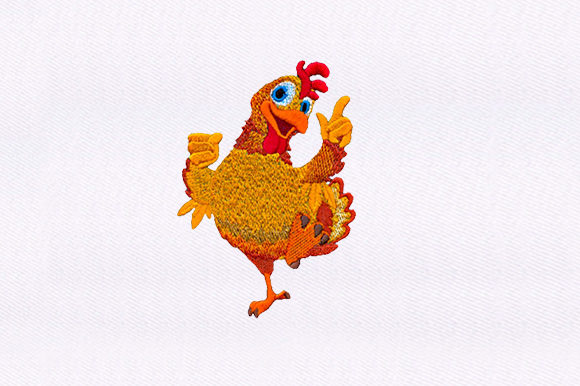
The first thing I noticed about Happily Rooster is its cheerful personality. The rooster stands with a proud yet friendly posture, making it feel approachable rather than aggressive. The comb and wattles are well-proportioned, and the tail feathers fan out in a way that suggests movement without being overly complex. For a machine embroidery design in the Birds category, it strikes a nice balance between decorative detail and stitchability.
The design uses a mix of satin stitch, fill stitch, and what appears to be running stitch accents for the feather details. The satin stitch areas around the comb and beak are cleanly digitized, with enough density to give the design a solid, polished look without feeling stiff. The fill stitch in the body feathers has a subtle texture that photographs well, which is a big plus if you are creating printable mockups or listing finished products on Etsy. The overall mood is warm and rustic, making it a strong candidate for farmhouse decor, kitchen textiles, and boutique children's gifts.
Stitching Performance: What to Expect When You Hoop
Before I commit any design to a customer product, I always run a test stitch on scrap fabric. I tested Happily Rooster on medium-weight cotton twill, a cotton-polyester blend sweatshirt fabric, and a linen-cotton kitchen towel. The design stitched out cleanly in all three tests, which tells me the digitizing is well-balanced for both woven and knit substrates.
The stitch density feels moderate, not overly heavy. I did not encounter any puckering or thread breaks during my tests, even when using a standard 75/11 needle and 40-weight polyester thread. If you are working with stretchy fabric like a jersey sweatshirt, I recommend using a cutaway stabilizer to keep the design stable, especially around the denser tail feather areas. For textured fabric like linen or a heavy canvas tote bag, a tearaway stabilizer with a layer of lightweight cutaway underneath worked well.
One thing I appreciate is that the hoop size required for Happily Rooster is reasonable. I tested it in a 5x7 hoop with no issues, and it should fit comfortably in most standard home embroidery hoops. If you are working with a smaller hoop, check the design dimensions on the Creative Fabrica product page before purchasing to confirm compatibility with your machine. The embroidery file formats listed include 10O, ART, CND, DSB, DST, DSZ, EXP, HUS, JEF, PCS, PEC, PES, TAP, VIP, VP3, and XXX, which covers nearly every major machine brand. I used the PES and DST versions in my tests, and both converted cleanly.
Best Applications for Happily Rooster in Real Projects
After my test stitches, I started thinking about where this design would shine in actual products. Here are the applications I found most natural for Happily Rooster:
- Custom apparel: The design works well on a sweatshirt or a denim jacket, especially when placed on the chest or back. The satin stitch details hold up to moderate wear, and the rooster's cheerful expression makes it a conversation piece.
- Tote bag design: I stitched Happily Rooster onto a heavy cotton tote bag for a farmhouse market booth. The fill stitch areas covered the fabric nicely without showing gaps, and the design maintained its shape after several uses.
- Kitchen towels and aprons: This is where the design feels most at home. The rooster theme is perfect for kitchen linens, and the stitch density is appropriate for items that will see regular washing. I used a tearaway stabilizer on the towel and a lightweight cutaway on the apron, and both held up well after laundering on gentle cycle.
- Baby blankets and nursery decor: If you mute the thread colors to softer pastels, Happily Rooster becomes a charming addition to a baby quilt or a nursery wall hanging. The design is not too heavy for a lightweight blanket fabric, especially with a soft cutaway stabilizer underneath.
- Embroidered patches: I also tested the design on felt with a heavy cutaway stabilizer and a hot-cut border. The satin stitch edge cleaned up nicely, and the patch stitched onto a canvas backpack without distorting.
- Pillow covers and seasonal handmade gifts: For a farmhouse-style throw pillow, the design adds a nice folk-art touch. I also see it working well as a seasonal gift for housewarmings, hostess gifts, or holiday markets.
- Cap embroidery: I did not test this on a curved cap surface myself, but based on the design's moderate density and clean satin stitch areas, I believe it would adapt well to a cap hoop with proper stabilization. Just be mindful of the design placement so the comb and tail feathers do not extend into the cap's side seams.
Practical Notes for Embroidery Designers and Small Business Owners
If you are considering Happily Rooster for your commercial embroidery work or your Etsy shop, here are a few practical observations from my test runs:
- Test on scrap fabric first: This is true for any new design, but especially for a design with layered details like the rooster's feathers. Run one test on a fabric similar to your final product before stitching on the actual item.
- Check thread color contrast: I stitched Happily Rooster on both a light cream fabric and a dark navy fabric. The design reads well on light backgrounds with medium to dark thread colors. On dark fabric, I recommend using a white or light gray bobbin thread in the top for contrast, or choosing bright thread colors that pop against the dark base. The satin stitch areas are distinct enough to remain visible, but the fill stitch can blend in if the thread colors are too similar to the fabric.
- Review stitch density before scaling: The design appears to be digitized at a density that works well at its intended size. If you scale it up or down significantly in your embroidery software, check the stitch density again. Reducing the size too much could make the satin stitch areas too tight, while enlarging could cause gaps in the fill stitch areas.
- Use proper stabilizer for the fabric type: I mentioned this earlier, but it bears repeating. For applique design or dense satin stitch sections, a cutaway stabilizer gives the most reliable results. For lightweight fabrics, a tearaway with a lightweight cutaway topper works well.
- Inspect small details after stitching: The rooster's eye and beak are small satin stitch elements. After your stitch-out, check that these details are clean and not distorted. If they look loose, a slight reduction in stitch density or a slower stitching speed can help.
- Confirm file details and licensing: Before you use Happily Rooster for any commercial embroidery or finished product sales, check the license terms on the Creative Fabrica product page. Licensing can vary between personal use, small commercial use, and extended commercial use. Always confirm that the license matches your business model, especially if you plan to sell the handmade product in multiple quantities or use the design in digital embroidery file bundles.
How Happily Rooster Affects Product Value and Buyer Trust
From a business perspective, the quality of the embroidery design directly affects how customers perceive your handmade product. A well-stitched rooster with clean satin stitches and smooth fill areas communicates care and professionalism. I found that Happily Rooster stitched out with enough detail to look premium without being so intricate that it caused production delays. This is important when you are fulfilling multiple orders or creating inventory for a craft fair.
The design also photographs well. When I created printable mockups for Etsy listings, the rooster's satin stitch comb and layered tail feathers showed up clearly in photos, which helps with customer engagement and click-through rates. If you are selling personalized gifts or boutique merchandise, a design that looks good in both real life and photography is a valuable design asset.
I also noticed that the design has a timeless, folk-art quality that fits well with current farmhouse and rustic decor trends. This gives it a longer shelf life in your product lineup compared to trend-driven designs that may feel dated after a season. For Etsy sellers and small business owners who want to build a consistent brand around handmade home goods, Happily Rooster offers a dependable visual anchor.
What to Keep in Mind Before Your First Stitch
No design is perfect for every project, and Happily Rooster has a few considerations worth noting. The tail feathers, while beautiful, are the densest part of the design. On very lightweight fabric like a thin cotton voile, I would recommend a heavier stabilizer or a layer of water-soluble topping to prevent the stitches from sinking into the weave.
The design also uses a moderate number of thread colors. While I did not count exact color stops, the visual suggests at least three to four color changes for the rooster's comb, body, tail, and beak. This is typical for a detailed machine embroidery design, but it is worth considering if you are stitching high volumes and want to minimize thread changes. You could simplify the palette for a faster stitch-out if the project allows.
If you are planning to use Happily Rooster on dark fabric, test with a white or light bobbin thread in the top for the satin stitch areas to ensure the design pops. On very dark backgrounds, the fill stitch areas can appear muted unless you choose bright, saturated thread colors.
Final Thoughts on Happily Rooster for Your Embroidery Business
After spending time with Happily Rooster in real project scenarios, I can say it is a solid addition to any embroidery designer's library. It stitched cleanly on multiple fabric types, translated well into different product categories, and maintained its visual appeal from the test stitch through the finished product. For anyone looking for a reliable rooster design that works on custom apparel, handmade gifts, tote bag designs, and sweatshirt embroidery, this Creative Fabrica embroidery file is worth considering.
As with any new design, take the time to test it on your specific fabric and stabilizer combination before offering it to customers. Check the embroidery file details on the product page to confirm hoop size and format compatibility with your machine. And most importantly, stitch with confidence knowing that Happily Rooster has the potential to bring a genuinely cheerful touch to your finished product lineup.